

The Metropolitan Police officer who shot Chris Kaba is unlikely to face misconduct proceedings due to new government regulations.
The Kaba family have been given three weeks to challenge the decision.
Firearms officer Martyn Blake shot the 24-year-old in Streatham, south London, in 2022, after Mr Kaba used his car to ram his way out of a police stop.
Mr Blake, also known as NX121, was cleared of murder by a jury at the Old Bailey, but the Independent Office for Police Conduct (IOPC) initially said he would face a gross misconduct hearing.
The police watchdog now says the case against NX121 will be dropped because of new rules from the Home Office being applied to misconduct hearings, which reduce the burden of proof for the defendant, bringing disciplinary hearings in line with criminal cases.
This news will come as a relief to firearms-carrying police officers but will frustrate campaigners who feel police accountability is already weighted against them.
Sky News has spent several months with the Met's firearms unit, MO19, for a documentary, titled Firing Point, to be aired later this year.
The police officers, backed by their commissioner Sir Mark Rowley, argue that their judgment on when to open fire happens in the heat of the moment, in split seconds, often when their intelligence tells them the person they are dealing with is dangerous. Yet the process for judging their actions takes years.
Travelling with MO19 officers to high-pressure callouts, we saw first-hand the unpredictability of their working lives and just how often they would be required to deliver first aid skills rather than use their weapons.
We also witnessed officers using restraint when facing a gunman.
These colleagues of Mr Blake said their overriding concern was that simply by doing their job, they could go to prison for the most serious of crimes.
On top of this, by being identified during a trial, criminals - for example, associate gang members of someone they have shot - would be able to track them and their families down to exact revenge.
Laws around identifying officers are also being changed, so that the public would only learn their names on conviction.
Change to 'honestly held belief' defence
The main change is the issue of "honestly held belief", which is a fundamental defence that can be used by anyone in the criminal courts if they killed or harmed someone in a moment when they judged there was a threat to life.
This defence was used by Mr Blake in his trial.
However, for several years, the test has been different for police misconduct hearings. Here, the honest belief must also be "reasonable".
This came from a Supreme Court judgment in July 2023, when judges decided the "civil test" is the "correct" test in a gross misconduct case.
They concluded that the disciplinary process was in part about learning the "reasonableness of mistakes".
They concluded: "Citizens should not feel that unreasonable mistakes by the police are left unchecked or that the police are not held accountable for such mistakes."
This view has been reflected by campaigners who feel that "honestly held belief" is a "get off free card".
Read more:
Police release photo of family found dead
Neo-Nazi who had 'kill list' jailed
Temi Mwale, who represents Chris Kaba's family, told Sky News: "We already have very little accountability, and they are going to make it so we have close to no chance of ever holding any officer accountable for any action ever again.
"If, for example, there are just a few bad apples, which they love to tell us, surely you would want to have very robust processes to get those people out."
Home Office: Officers allowed to make 'genuine mistakes'
However, the Home Office has argued that police officers dealing with intense situations should be allowed to make "genuine mistakes".
One example given to us by the Met commissioner was someone reaching for a gun under their arm, when they are known to carry a gun and have been told to put their hands up. What if it turned out they didn't have a gun? Is that the officer's fault?
By bringing criminal and misconduct cases to the same level of proof, it streamlines everything, negating the need to have two processes.
The IOPC's director of strategy and police, Andrew Johnson, said of their decision to drop the case against Mr Blake: "We carefully considered the law change and its stated intent to address the perceived unfairness and lack of proportionality of the civil law test.
"We believe this position provides consistency across impacted cases and it is fair to officers who are facing potential dismissal for misconduct, which if it occurred now, would not amount to misconduct under the law."
What everyone can agree on is that, with inquests, criminal trials and gross misconduct hearings, the process takes too long.
Mr Blake's situation has been unresolved for nearly four years. Another case for a firearms officer took a decade to resolve.
The Met commissioner described this as "inhumane". It leaves the lives of officers and victims' families in limbo for far too long.
These are highly charged, consequential questions over how our police are held to account. It is likely the Kaba family will challenge the decision.

(c) Sky News 2026: Met Police officer who shot Chris Kaba in south London unlikely to face further action
 History man! British wildcard Arthur Fery beats Italy's Cobolli to reach Wimbledon semis
 Staff at 'thousands of charities' threatened and intimidated for 'doing their jobs'
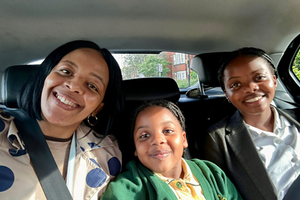 Police release picture of mother and two children found dead in home - as father suspected of killing them 'on the run'