

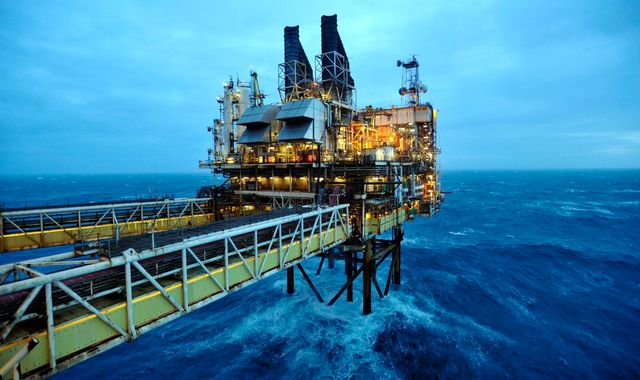
Hundreds of offshore workers could be at risk of losing their jobs when a new weight limit comes into effect next month, an industry body has warned.
Offshore Energies UK (OEUK) is bringing in guidelines from November where all those working offshore will need to weigh less than 124kg (19.5 stone).
The trade body said this is required on safety grounds, as it is the most a person can weigh when they are being winched from a platform into a helicopter in an emergency evacuation.
Since announcing the policy last year, OEUK said it has helped operators identify and implement measures to slim down their offshore workforces.
This has led to the number of workers over the limit dropping from about 2,200 in early 2025 to 840 earlier this year, with OEUK saying it is "delighted" so many have achieved it.
However, an estimated 241-300 workers are projected to still be above the weight limit when the policy comes into effect, meaning they could face losing their jobs.
OEUK health and safety leader Graham Skinner said some of these people may no longer work offshore in the UK, or they could be moved to onshore roles by their employers.
He said: "We are hoping that the vast majority of workers will have found a way through this.
"But the reality is also that if somebody has chosen not to lose weight [or] doesn't particularly want to comply with the policy for any reason, then there will be a route out of employment as well.
"Ultimately, it's a safety policy, and it is related to capability.
"If somebody cannot mobilise for their work because they're over the weight limit, then they will not be able to work. In the worst cases, that would mean somebody will lose their job."
In the past, the industry made changes to safety equipment to compensate for the growing waistlines of offshore workers.
This included making lifeboats bigger and more robust, and ensuring larger workers were seated next to the largest windows when travelling on helicopters.
Mr Skinner said that while the new limit is based on helicopter winches, capping the weight of workers will benefit "all aspects" of life-saving equipment on offshore platforms.
It could also reduce the risk of medical evacuations for health-related reasons - including things like heart attacks and strokes - which in 2025 accounted for 78% of all medivacs, he added.
More from Sky News:
Police to examine Thomas Markle's digital devices
Audio reveals crucial mistake before deadly train crash
The National Union of Rail, Maritime and Transport Workers (RMT) has voiced concerns the new limit could provide employers with a "convenient mechanism" to sack staff without proper redundancy procedures or financial compensation.
RMT general secretary Eddie Dempsey said "nobody disputes that safety must be the overriding priority when working offshore" but is calling on OEUK to "withdraw the policy and engage in meaningful consultation with trade unions to establish a fair, proportionate and evidence-based approach to offshore safety".

(c) Sky News 2026: Overweight offshore workers could lose their jobs under new rules, industry body OEUK warns
 Trump warned $10bn BBC lawsuit could be dismissed over missing documents
 Poundland closer to collapse as it files notice to appoint administrators
 Knifeman on train had 'greatest delight on his face', court told